Wednesday, July 18, 2012

Animal of the Week July 16, 2012 -- nice weather for, er...

The constant misery of the UK summer this year is reportedly having disastrous effects for many species—from bats to bees, songbirds, puffins, and butterflies—breeding success is down and some are threatened with local extinction. The saying goes that it's nice weather for ducks, although I suspect even they aren't faring particularly well; I've not seen a great swell in duckling numbers, and while not actually ducks, I know of at least one coot nest on the men's bathing pond on Hampstead Heath that was destroyed in a storm. One animal, however, for which the weather does seem to be particularly good news is Arion vulgaris (Spanish slug).

 At it A vulgaris c Zollernalb
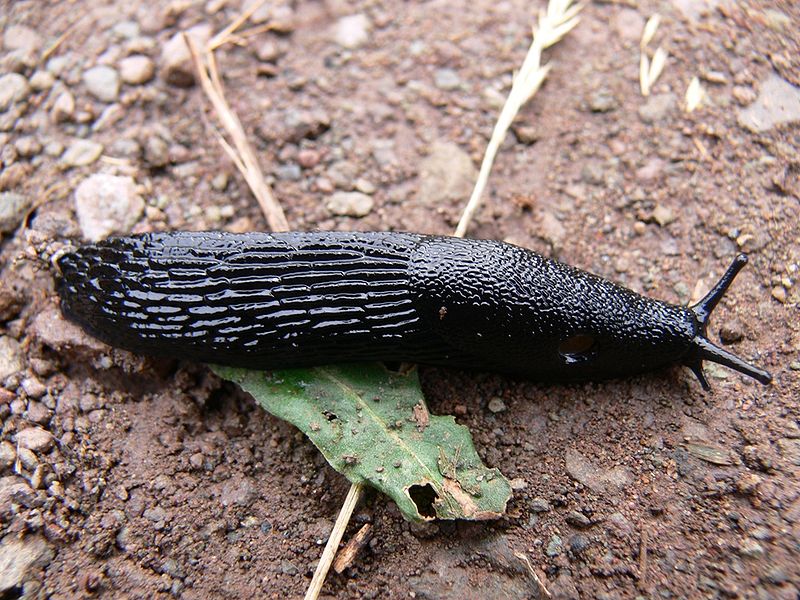
The Spanish slug is considered to be one of the most damaging invasive species in the UK, where it was first recorded in the 1950s. Originating in the Iberian peninsular, the slugs lay 400 eggs in a single brood, expecting some of these to be dessicated by the arid conditions there; unfortunately further north in Europe, the damp weather—oh the damp damp weather—means that entire clutches hatch successfully. Moreover, in the north of Europe, they might be interbreeding with their native cousins black slugs (Arion ater) and becoming frost resistant, so populations are not checked by winter cold.

Frost tolerant A ater c Prashanthns
Favouring cultivated or disturbed land, the Spanish slug is now one of the most familiar slugs to people in the UK. This year they have rather disgustingly reached almost plague proportions; wreaking havoc in allotments, gardens, and farms up and down the country. Many agriculturalists are facing devastated crops not only because of the wet weather but also because of enormous amounts of slug damage.

Slugs will eat almost anything, from growing plants, to carrion, to faeces. Sur le continent, the Spanish slugs have been attacking snail farms: once they've dined on l'escargot they sometimes lay their eggs in the empty shells. Slugs in general seem particularly attracted to other dead or dying slugs. Apparently—and this is where you may need to hold onto your lunches—slugs pose a road hazard, as more and more are drawn to casualties on roads they can create dangerously slippy slicks of squished slugs.

How can you combat slugs? Egg shells, sharp sand, and coffee grounds are all supposed to repel them from tender plants; obviously slug pellets are an option and sales have rocketed this year, but they make sure you use the ferric phosphate kind if you must. Beer traps may catch a few; but let's face it, you'll just end up face down in a drunken stupour, covered in slugs in your garden if you try this. Copper wire around plant pots will stop them climbing in, and of course there's the old salt trick -- although that's not much use for gardeners as salt ain't good for your plants.

Christine Walkden of the Gardeners' Question Time panel last week came up with this stomach churning suggestion related with far too much glee. Collect the slugs from your plants, put them on a patch of pavement, squash them underfoot, leave for a couple of hours for other slugs to hone in on the squashed slugs, go out and trample those underfoot, repeat. This is what I inadvertently ended up doing on my way to and from the pub walking alongside Dartmouth Park Reservoir on Monday evening.*

*AOTW does not advocate the killing of any animals, although I acknowledge that some level of pest control may be necessary. You can encourage other animals that feed on slugs into your garden, but actually, the habit of slugs to curl up into a tough ball and secrete noxious mucus means that many animals will only really eat slugs as a last resort: blackbirds and hedgehogs are likely to be your best friends; badgers and wild boar are also predators of slugs, but also not that great for your garden.

Slugs head to toe
1, Slugs have two pairs of tentacles: the smaller lower pair are used as chemosensors, essentially they're the slugs' sense of smell; the top pair are tipped by the slugs' eyes.

2, The sadle shaped mantle is the real business part of the slug, housing it's organs including it's digestive tract, genitals, and lungs.

3, On the right hand side of the mantle, slugs have a pneumostome, an opening through which air enters the mantle.

4, Slugs are hermaphrodites, although some species still only reproduce in pairs, some, such as Arion vulgaris, will self-fertilize and can produce a fertile brood, if no mates are available.

5, The large part of a slug is its foot, a large muscular organ that propels the slug around on a film of mucus secreted by the slug.

Tuesday, July 10, 2012

Animal of the Week July 9, 2012 -- Spot the difference #1

So, here is the first in a series (given my output perhaps of one) of ramblings about the differences between things. The idea was prompted by a text message from my sister Sarah on Sunday asking "What's the difference between shrimps & prawns". Fortunately I had recently investigated this myself, so was able to reply that it's actually more of a semantic thing than a phylogenetic thing; although on revisiting the subject, I find that actually that's not the whole story, and it really depends on who you speak to and where they are from.

Classic curvy prawn
(Penaeus monodon)
Classic shrimp back bend
(Pandalus borealis)
In certain fields, distinctions are made between shrimp and prawns. For example, taxonomists classify decapod crustaceans (a grouping that also includes crabs and lobsters) of the infraorder Caridea as shrimp and those of the suborder Dendrobranchiata as prawns. And to some extent this works for the scientists: shrimp have two pairs of pincers and a hooked body among other defining characters, and prawns have curved bodies and three pairs of pincers. However, many animals called shrimps (miracle shrimps, mantis shrimps, and some freshwater "shrimps") and some called prawns (the Dublin Bay prawn for example) belong to completely different groups of crustaceans—neither prawns nor shrimps.

In common day parlance, this division works in some circumstances. For once, the Aussies have it phylogenetically spot on. In Australia (sorry Sarah, I got this wrong), the phylogenetic distinction is quite rigorously enforced: prawns are those animals of the family Penaeidae (those most closely related to the tiger prawn), whereas shrimp are the Caridea.

Brown shrimp (Crangon crangon)
In England the size distinction between "prawns" and "shrimps" fits generally with the taxonomic division. The brown shrimp (Crangon crangon) caught around the UK, boiled, shelled, and "potted" deliciously in butter belongs to the Caridea and is indeed a shrimp, and big fat tiger prawns (Penaeus monodon) have a long curved body and three pairs of pincers, so are clearly prawns. However, the north Atlantic peeled prawn in the classic prawn cocktail (Pandalus borealis) is actually a shrimp. In North America the word prawn is rarely used, with even the largest members of the Dendrobranchiata being served as shrimp. To illustrate the problem further, the freshwater prawns of the genus Macrobrachium, popular in the cuisine of south and southeast Asia, are despite their large size, actually members of the Caridea. And in aquaculture, the term "shrimp farm" is becoming increasingly used for any attempts to cultivate any of these animals.
 
Prawn cocktail (phylogenetic shrimp)
So what is a prawn and what is a shrimp depends on your field of interest—phylogenetic, agricultural, or gustatory—and where you are from. The terms "prawn" and "shrimp" are both used as slang, again with regional preferences, to refer to someone who has a good body but an unattractive face, this use is derived from the practice of eating the body but throwing away the head of these crustaceans.

Wednesday, July 04, 2012

Animal of the Week July 2, 2012 -- New balls please

Wimbledon is in full swing once again which can mean only one thing: rain. But attendant to the rain delays are quirky stories to fill up allotted hours of airtime. With Cliff Richard conspicuous by his absence, our focus has been on Andy Murray's balls falling out of his shorts and on this week's animal of the week Parabuteo unicinctus (harris hawk), specifically Rufus, the hawk used to prevent pigeon delays should the rain ever cease.

Harris hawks, native to the more arid regions of the USA, are unusual among birds of prey in that they hunt in groups: with previous years' chicks hanging around to help out their parents. When hunting, several birds will fly ahead while another flushes prey forward towards them -- like the velociraptors of Jurassic Park. Their social nature and their intelligence make them ideal for human use; and they are now the species most widely used in western falconry.

These hawks, as well as peregrine falcons, are commonly used in management of public spaces to deter pigeons. Around London, for example, the birds have been used at St Pancras Station, St Pauls, Trafalgar square, and Westminster Abbey to deter pigeons during major events. Rufus and his colleagues will also be zipping around the olympic site. Rufus hit the headlines this year as he went missing from Wimbledon last weekend when he was stolen from a van in which he had been left overnight. Fortunately he was left, unharmed, with the RSPCA and is now back on duty.


Here's a song fittingly called Army of Birds by the  marvellous Gaggle whose album launch gig I am off to this evening.

And here is a song about tennis players (well, it's not about tennis players, but the title suggests it might be and it is bloody beautiful).

As I leave this post Murray is one set down four games apiece in the second set of the quarter final against Ferrer. I very much enjoyed the candour of one Spectator I saw interviewed in the coverage:

BBC reporter: "Do you think Andy Murray stands a chance this year"
Interviewee: "No"

Tuesday, June 26, 2012

Animal of the Week June 25 -- Bye George!

I couldn't let the passing of Lonesome George go unmarked—so here's one for the last Pinta giant tortoise (Chelonoidis nigra abingdoni), which died on June 24, age 100 or thereabouts. Since 1971 George has been recognised as the sole surviving member of a subspecies of Galapagos giant tortoise from the most northerly island of the archipelago, Pinta. The subspecies became known as the rarest animal in the world with just one known representative.

Originally there were perhaps as many as 15 subspecies of Galapagos giant tortoise, George's passing brings the total down to 10. When Darwin visited the islands in 1835 the differences between the shell shapes of the subspecies helped him to appreciate the nature of variation and adaptation: tortoises on islands with lots of moisture had large domed shells and grazed on grass and plants at ground level, those in more arid environments had saddle shaped shells that enabled them to browse shrubs and bushes.

The three familiar villains of overexploitation (by seafarers who used them as living larders), habitat destruction, and introduced species (particularly the goats) were responsible for bringing the population of over 250 000 Galapagos tortoises in 1600 down to as few as 3000 in the mid-1900s. The population has recovered to perhaps 20 000 now, but none of those are George's subspecies.

As the poster child of the plight of the Galapagos tortoises, George who appeared on Ecuadorean bank notes and postage stamps, was a focal point for conservationists; and his tourist pulling power has helped to raise a lot of money. Efforts to restore habitat, notably by the near eradication of feral goats from much of the Galapagos, have made the future much brighter for the other subspecies, if not for George and his closest kin. 

Attempts had been made to mate George with females of other closely related subspecies, but sadly he showed little interest -- he was a solitary fellow shunning most contact both human and testudine. But perhaps the story of the Pinta island tortoise doesn't end with George, there's stories of a Pinta tortoise in a German zoo, and some tortoises on nearby islands seem to be hybrids, raising the hope that even if a pure-bred Pinta tortoise doesn't still exist, their genetic diversity lives on.

Peter Hayward
Head Keeper
Animal of the Week
Follow on Twitter @animaloftheweek

Revisit old Animals of the Week at http://aotwanimaloftheweek.blogspot.com/

You have been added to the AOTW mailing list because a friend nominated you. If you no longer wish to receive these mails, please reply to this email putting the words "Don't monkey me no more, you fool" in the subject line. Counterclockwise, if you would like to nominate a friend (or enemy) to receive animal pleasure, reply with their address in the body of the email and the words "Monkey this badass, too" in the subject line.

Thursday, May 31, 2012

On bees

So, my recent post on short-haired bumblebees got me a-wonderin' about bees. There's honey bees, bumblebees, carder bees, cuckoo bees, carpenter bees, sweat bees, stingless bees... and they're just the ones that spring immediately to my mind. But what's the difference between the bees and why don't we eat bumblebee honey?


WHAT THE F*** IS HONEY ABOUT
Honeycomb, George Shuklin
Honey is a food source used by some social bees to feed their young. It's essentially nectar from flowers that foraging worker bees have sucked up into a special nectar stomach. When a foraging honeybee returns to the hive it regurgitates the nectar into the mouth of a hive bee. The hive bee then adds various enzymes and such that break down the complex sugars into more simple fructose and glucose. Once this is done, the honey is deposited into a wax honeycomb, the hive bees fan the comb to help water evaporate increasing the sugar concentration -- once the honey is a supersaturated solution that by rights shouldn't be liquid, the bees seal of the honey, which is then ready to use as a food source for the hive in winter. The primary food source of most bees is pollen, some bees other than honeybees do make honey, but only in small amounts and never to quite the same magical effect: bumblebee honey is often said to be quite watery, and no more than a 100 g (usually a lot less) will be in the colony at any one time.


HONEY IS THE ONLY FOOD THAT DOESN'T GO OFF
If anyone ever asks you in a pub quiz what the only food is that never goes off, answer "honey" -- it's the answer they want. However, this isn't really true. So, OK, honey is pretty sterile and almost no bacteria will grow in it. When it changes from liquid to solid in your cupboard, that's just a process of crystalisation and it's still perfectly edible. So yeah, maybe honey won't go off as long as it doesn't get wet. But what about salt, and sugar, and canned goods? They don't go off? I've got a bag of flour in my cupboard with a best before date of 2005, it's fine! How many times have you read a news story about a can of Spam found in an old bomb shelter that still tasted just as good as the day it was canned during the Blitz? I mean, I don't know what the strict definition of "foodstuff" is, but I'm about as likely to eat a bowl of sugar as I am a bowl of honey -- and I'm as likely to add salt to my porridge as I am honey (I'm no Goldilocks).


BEES' DISTANT COUSINS
Bees are part of the large group of insects, the hymenoptera, the etymology of which I once discussed here, which also include sawflies, wasps, and ants. With over 130 000 species, hymenoptera are one of the largest groups of insects; we know quite a lot about some hymenoptera because the trait of sociality, which is by no means universal to the group, but expressed by many of the best known members (some bees and wasps and all ants). Sociality in this sense is not just hanging out together, lots of animals do that, but rather hanging out in groups in which different individuals have different roles within the group (for example, but not limited to, workers, reproductive individuals, guards, and so on). This form of sociality, called eusociality by biologists, is very rare in the animal kingdom, naked mole rats provide another example.


BEEING
There are nine families (groups based on shared physical and genetic characteristics) of bees comprising 20 000 known species found on all continents except Antarctica. But we are perhaps most interested in bees because of just one species, the honey bee, Apis mellifera. Among the 20 000 bee species, honey bees and bumblebees are quite closely related, relatively.


BUMBLEBEES
Bumblebees, any of 250 species in the genus Bombus, belong to the same family as honeybees. They are essentially large, hairy, social bees. Unlike honeybees, bumblebees live in small colonies of at most a hundred or so individuals that typically die off after just one breeding season. A queen will start a colony in spring, or earlier, produce workers throughout the summer. Towards the end of the summer, the colony will start to produce breeding bees -- queens and drones. These bees fly off, look for mates from other colonies, and the mated queens then hibernate, emerging in spring to start a new colony.


WHEN IS A BEE A CUCKOO?
Cuckoo bee
NEVER! However, there are quite a few species of bees that have given up collecting pollen and nectar to feed their own young, and instead lay their eggs in the colonies of other bees, just like the European cuckoo does with other birds. Most cuckoo bees belong to the group Nomadinae, and these generally look a bit waspish, parasitise solitary bee species, and nip in to a nest, lay their egg, and leave. In the genus Bombus, cuckoo bees in the subgenus Psithyrus resemble closely the social bumblebees they parasitise; the cuckoo queens invade the bumblebee colony, kill the queen and take up residence, getting the workers of that colony to raise her own brood.


ETYMOLOGBEE
Just 153 years ago in the Origin of Species, Darwin wrote of humblebees rather than bumblebees, and for centuries before, although both terms were in use, humblebee was more prevalent. For no apparent reason, however, since the end of World War II the term humblebee has fallen into almost complete disuse. The "humble" had nothing to do with pie or low rank, but instead was related to the hum the bees make as they fly. The Latin name for the genus of bumblebees is Bombus, so one might think that the newly adopted preference for the "b" spelling arose that way somehow given the similarity between "humblebee" and "bumblebee". This is actually all much of a muchness: the Latin "bombus" has its origins in the Greek "bombos" meaning "hum".


STINGLESS, CARPENTER, MASON, SWEAT
No, I'm not counting cherry stones. There's basically crap loads of bees -- like honeybees, bumblebees, cuckoo bees, many of their names describe their habits. Sweat bees are attracted to human sweat, as such you'd think I'd be more familiar with them than I am. Most stingless bees are social relatives of honeybees that, you guessed it, can't sting because their stingers are greatly reduced; although several other groups of bees have lost their stings, and are also stingless bees but not known as such. Carpenter bees nest in holes in wood, bamboo, or structural timber. Mason bees make compartments of mud or clay in their nests. Orchid bees are bees from central and south America that gather fragrances from orchids. There are so many bees that some of them don't even have common names: the 25 species in the smallest family of bees, the Stenotritidae, are known only by their latin binomials.
Orchid bee


TWO BEES OR NOT TWO BEES
Although we often think of bees as social animals, the vast majority of species aren't. The same is true of wasps and sawflies their hymenopteran cousins. Rather than being common to all hymenoptera, sociality has evolved numerous occasions within the group. The reason bees, ants, and wasps are prone to sociality is probably to do with the haplodiploid method of sex determination, which means that males arise from unfertilised (haploid; one set of chromosomes) eggs, but females arise from fertilised (diploid; two sets) eggs -- this means that sisters are often more closely related to each other than to their mothers or fathers, which means that cooperation between sisters will lead to evolutionary success.


BEE GEEKERY
Actually, sometimes diploid bees will be males, but that's because they share identical copies of the genes that determine sex on both the relevant chromosomes (normally the copies of these genes on two different chromosomes in a pair would differ).  The likelihood of a queen producing a diploid drone increases if the male she mates with is a close relative. Diploid drones are less fertile than haploid drones, so actually detrimental to a colony -- workers typically sniff out diploid drones and kill the larvae before they develop too far, thus saving the hive the energy of raising them.


EPBEELOGUE
This, er, brief foray into the world of bees reflects some things I thought interesting about bees, some things I'd wondered about, and then some interesting things I found out while researching the things I had pondered. There's about a million and one things known about bees that I have not even scraped the surface of, and even more that people don't know about bees. But don't you worry, I am sure to return to the topic in future AOTWs. One might say "I'll bee back".

Monday, May 28, 2012

Animal of the week May 28, 2012 -- the shite of the bumblebee

Hey!

Three AOTWs in 1 month? You've got to be kidding, right? Because reintroductions of species lost from the UK is a favourite topic of mine, this week's animal is Bombus subterraneus (short-haired bumblebee).

Of the 25 species of bumblebee native to the UK, three have vanished and others are in rapid decline. The decline is thought to be largely due to loss of habitat and increased use of pesticides associated with intensification of agriculture since the end of the second world war. The last short-haired bumblebee was seen in the UK in 1988.

The short-haired bumblebee has, er, short hair, and is a long-tongued late emerging species. The Bumblebee Conservation Trust along with other conservation partners gathered 100 females from Sweden, after a couple of weeks in quarantine, checking their droppings to make sure they had no parasites or diseases, about 50 of these bees have been released at the RSPB reserve at Dungeness in Kent.

Finding 50 Swedish queens that are parasite and disease free is no mean feat, and it's hoped that these bees will now establish colonies at the reserve. The work of the conservationists planting wildflower meadows while preparing the site for the release has also been good news for other bee species: the shrill carder bee has returned after an absence of some years.

Welcome back short-haired bumblebee. May your colonies grow strong in the coming summer.

NB: this story is deficient in puns because the BBC got their first.

Wednesday, May 09, 2012

Animal of the Week May 7, 2012 -- y'alright cock

Female greater vasa parrot in mating plumage (forground)
Back in the mists of time, before the Baiji was declared extinct, before Tony Blair's Labour government was elected for a third term, before Boris Johnson became Mayor of London, before a million other sadnesses, animal of the week began because I wanted to find out what the "other" poisonous mammal was. As someone very interested in animals, particularly mammals and birds, I was stunned I had never heard before of a solenodon. Just recently I had a similar zoological epiphany when I discovered (on the internet -- not in an adventurous exploratory sense) Coracopsis vasa (the greater Vasa parrot).


I'm was extra surprised not to know about the vasa parrot, because it is from Madagascar and has weird sex (for a bird). And if there are two things sure to pique my interest, they are weird sexual behaviour and living on and island (cf  my favourite Amanda Donahoe film, Castaway).

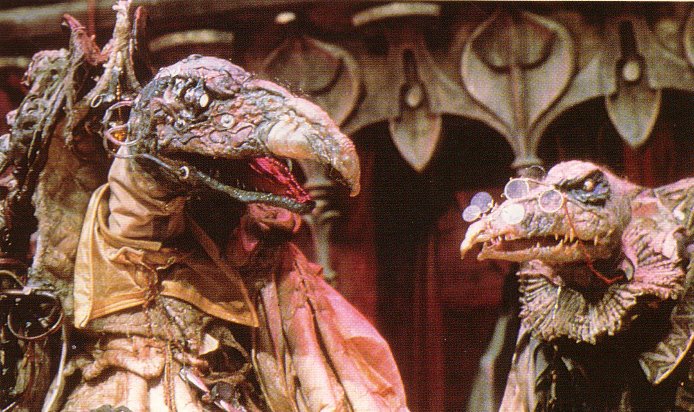
Perhaps one of the reasons these birds are overlooked in the natural history programmes is their slightly odd mating behaviour. While many are aware that dogs and wolves can become locked together during coitus in a copulatory tie, you rarely hear David Attenborough discussing this. And dogs are cute: by the time the vasa parrot female is linked to her mate (usually for half an hour sometimes for much longer) she has lost all the feathers on her head, which has turned bright yellow -- the couple, I imagine, bear a striking resemblance to copulating skeksis from the film The Dark Crystal.


Skeksis from The Dark Crystal
What makes the copulatory tie particularly special in these birds is that the presence of a penis-like organ is unique among parrots. Indeed, very few birds have such an organ: other notable exceptions include ostriches and ducks, which like the vasa parrot mostly keep their organ inside and only protrude it when mating. Most other birds exchange gametes through a cloacal kiss.

The mating system among these birds is also unusual because they are polygynandrous, with a female mating with several males. If kept in captivity, breeding is more successful if a single female is kept with two or more males. During the breeding season the females become very vocal and occasionally violent with reports of them killing males housed with them.


Despite the slightly adult themes of this AOTW, I'd like to dedicate this week's animal, squawking away on a distant island in their own wild rumpus, to Maurice Sendak, author of Where The Wild Things Are.