Monday, July 31, 2006

Animal of the Week July 31, 2006 -- Make it stop!

**WARNING: CONTAINS STRONG ASTERISKS**
Right, look, I know Sundays are traditionally a day of family outings, long lunches, and quiet down time, but there are vast swathes of people who, in the late afternoon, want to vegetate in front of the television. In a world in which every tinpot organisation has a tv channel, I guess the following statement is going to make me look like a bumpkin extolling the virtues of scythes over those of combine harvesters, but I believe that five channels should be enough, and only have the old terrestrial package. So, yesterday afternoon, with the effects of the previous night's party kicking in, I slumped into an armchair, switched the television on, and picked up the tv guide. My viewing options were as follows:

BBC1: As Time Goes By -- Geoffrey Palmer and Judi Dench besmirch their careers with tawdry snail-paced "comedy"; a repeat.
BBC2: Some Mothers Do 'Ave 'Em -- Perenially repeated "classic" sitcom, many hold this in great affection so I'm not going to slag it off too much, but every episode must have been shown at least 100 times in the past 20 years, and in all fairness the only three jokes in any episode are Frank Spencer's silly voice, his ill-fitting clothes, and him falling off a roof.
ITV: Call Me A Cabbie -- in which celebrities who have unfortunately been brought back from the jungle (the two greatest problems with I'm a Celebrity Get Me Out of Here are that it's televised and that any of the participants are ever allowed "out of here" [although I'd watch "Celebrity Lost", in which there is no hope of rescue and every chance of mauling by a polar bear]) face the challenges of learning The Knowledge and picking up mockerny accents under the tutelage of a cabbie mentor. The celebrities, you ask: Janet "Ramblin'" Street-Porter, Carol "Iron Mumsy" Thatcher, and Jeff "ex-Mr Jade Goodie" Brazier. Words cannot describe my feelings about this concept (they can actually, but the image I have concocted cannot be broadcast for fear of offending people, those of strong constitutions might like to ask me about this). Call Me A Cabbie is surely the lowest TV ever created...Oh wait
Channel 4: Britain's Top Dog -- Each episode, four untrained dogs and owners from a different region (this week, the southwest) are selected by a panel of three judges then given intensive training before they compete by perfoming agility exercises, scent-trials, and doggie dancing. I have no idea what the point in this show is, perhaps to showcase the complete lack of appropriate care for people with mental incapacities in the regions featured. The normalised insanity of the westcountry truck driver who takes his shelti waterskiing and motorbike riding and the woman with 16 dogs were completely overshadowed by the three-time divorcee whose jack russel had become her fourth husband (when we first see them in their everyday life, she is receiving a massage, the dog is beneath the massage table licking her mouth and she DOESN'T TELL IT TO GET OUT OF THE MASSAGE PARLOUR, BUT SHE KISSES ITS FILTHY DOG TONGUE!!!). Liza Tarbuck, presumably taking huge amounts of ritalin to remain focused on the hyperbanal pile of crap, guides us through the show, and although she never really manages to sound excited she does a fantastic job of not slitting her wrists live on air as a poodle stands still for a full minute completely failing to give a damn about its owner's stolen wallet that has been secreted in the turn up of a mock-theif's trouser leg in the scent trial. The absolute nadir was watching the trucker getting so excited about doggie dancing that he put in hours of intensive extra training and at one point tried to get the dog to jump through his legs as he did a headstand. This was, it turns out, the third of four regional heats. It's f*ing Dog Idol, and it's wrong, wrong, wrong... please read the middle column of this webpage (http://www.channel4.com/about4/overview.html) then consider the show I have just described. F*ed up.
Channel 5 -- Robocop: The Future of Law Enforcement (fourth part of awful film franchise -- I'd have considered watching this but had missed the first half hour, so probably wouldn't be able to work out what was going on).

But salvation was at hand, in just a few minutes, when Frank Spencer had received an amusingly placed bandage and supremely embarassed himself in front of his mother in law for the fiftieth time (I didn't watch it, but I know these things happened), The Natural World would start. Nature documentaries, that's what Sunday should be about! I decided that whatever it was that was the subject this show would be AOTW. Turns out though, scheduling and programme making had been taken over by three year olds and that The Natural World was one of those god awful storybook accounts called The Monkey Prince in which Kristin Scott-Thomas, providing the narrative voice of a baby female monkey born into a troop of monkeys in India, told the tale of a fellow baby monkey, born to a high ranking female, but cast out after his mother died, but who then rose to the highest rank after surviving many precarious adventures in his life. Suffice to say it was f*ing sh*. First off, they didn't even tell you what type of bloody monkey it was. Why we were supposed to believe this was not just a re-edited footage from six different old documentaries to provide a blatant rip-off of the Lion King, I do not know. White-Ear, Long-Tooth, and Nine-Fingers and the rest were probably all real monkey's, but why, after naming the troop after physical attributes, The Monkey Prince, the longsuffering but triumphant focus, was called Bobo, and not No-Mum or something, I cannot fathom.
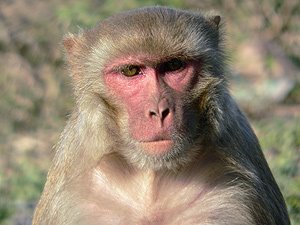
So, this week's animal of the week is Macaca mulatta (rhesus macaque), an animal so interesting there are at least three informative documentaries that could be made about it without people becoming bored. Named after a King of Thrace, these animals have given their name to a blood factor—if you're blood type is A negative, the negative refers to a lack of the rhesus factor—that was discovered in them. Widely used in research these are the archetypal primate research model and have facilitated numerous medical and scientific breakthroughs and the focus of many campaigns against animal experimentation. Rhesus macaques live across south Asia, from Pakistan to Thailand; they are highly adaptable, living in hot arid regions, forests, and even mountainous areas where the temperature might regularly fall well-below freezing. In areas where breeding is seasonal, the male's already large testes swell even more during the mating season. Both males and females have strict dominance hierarchies: one male fathers most of the offspring in a troop until he is deposed by a younger, stronger male; the highest ranking female will have best access to food and protection from the males. In China and Thailand, competition with and exploitation by people have forced them onto the margins of existence, in India they have adapted to life with humans, and in some places troops live in metropolitan areas. Not one of these facts would you have gleaned from watching The Natural World yesterday. Sentimental tosh. Grrrrr!

I turned back to the dogs for a bit; then gave up and went to check that the gas was still working in the oven and that our toaster flex stretches to the bath in case such a situation ever arises again.

I thinkyou thanks

Monday, July 24, 2006

Animal of the Week July 24, 2006 -- Ginormous Jellyfish of Japan

Hola!

A couple of months ago, the humble mayfly was AOTW, after a couple of days of mass hatchings and dyings the insects have been known to clogg up cooling-water intake pipes of nuclear power plants. Well, now other invertebrates are getting in on the anti-nuclear act, Chubu Electric had to reduce production at the Hamaoka power plant to 60% when not enough cooling seawater could be sucked up due to the pipes being blocked by this week's animal Stomolophus nomurai (Nomura's jellyfish, echizen kurage). Whatever next, CND centipedes?

These giant jellyfish have been appearing in unusually large numbers around the west coast of Japan for the past few years. As densities have exceeded 100 times the normal levels, fishermen in the Sea of Japan trying to catch anchovies, shrimp, and the like have been thwarted by the jellyfish, the weight of which would break their nets. If they did manage to haul a net aboard intact it would be filled with either a lump of jellyfish or fish so slimed up and poisoned that they could not be sold.

The danger posed by the jellyfish is probably quite minor—nuclear power companies are used to having to clear typhoon debris, swarms of shrimp, or the occasional dolphin from their cooling pipes. Although the 2 m wide, 200 kg jellies can sting, their poison is only very rarely fatal to human beings.

However, what should happen if the jellyfish make it to the nuclear source?! As a child, I remember seeing in the news a story about a giant radioactive moth attacking Japan, they had to get this dinosaur type thing to sort that out.

Should you be stung by a jellyfish this anchovy season, remember that weeing on the sting as recommended by the school of received wisdom is not a good idea, it'll cause more poison to be released. Ideally apply a weak solution of vinegar, if no vinegar is available, use bicarbonate of soda, if this is unavailable, use meat tenderiser (apply for no longer than 10 minutes). If you are not in a kitchen when stung, wash with sea water (that you have first carefully inspected for jellyfish).

Revisit some of the old Animals of the Week at http://animal-of-the-week.blogspot.com/ I don't like blogs, but what can you do?

Ta

Ps, if anyone knows any cheap accomodation with good access to South Kensington in London that will be available from the September 22-ish, give me a shout.

Monday, July 10, 2006

Animal of the Week July 10, 2006 -- World Cup Nations 5 Italy are the Champions

Hey Kids,

I so nearly chose some form of headbutting goat as French AOTW last week, gutted that I didn't, pah! I loved Zidane's caprine charge, much more graceful than the jolting Glasgow kiss with which we are more familiar in modern times. Not that I watched the match you understand... oh no.

Well, that's football done for another 4 years. And as the World Cup wings its way to Italy, this week's Animal is in memory of another item that will hopefully be returning to the boot of Europe, JJ1 (Bruno the bear). The 2-year-old member of the subspecies Ursos arctos arctos (European brown bear) was born in Italy in the Adamello-Brenta natural park of the Trentino, South Tyrol, region of northern Italy, but had a somewhat less successful trip to Germany than the Italian football team.

The return of a bear to Germany after a 170 year absence of the species was initially heralded as a landmark event in the repopulation of Europe by bruins. The bear's stereotypical behaviour delighted me, the first report I read had him raiding a beehive for the honey. I was awaiting the news that he had been witnessed pilfering pickernick baskets. Although he did frustrate the local rangers for a while, he fatally moved onto a diet of sheep, rabbits, chickens, goats, and a for dessert a guinea pig, and from then on started to rankle German authorities. Brown bears can kill a cow with a single blow of a paw, outrun a horse, and swim faster than an Olympic swimmer. Farmers were upset by loss of stock, and people worried that Bruno's apparent lack of fear of humans could pose a threat to people as he came into close proximity with them. Attempts to capture him alive so that he could be relocated failed, Bruno evaded capture for several weeks. Finally the authorities declared open season on the ursine marauder and he was shot at the end of June. At the Italy vs Germany semifinal, fans waved banners calling for revenge for Bruno. Italy have now asked for JJ1's body to be sent back, although the most recent reports said that the plan was to stuff the 2 m animal and install it in a museum in Bavaria.

Over the past 10 years, Italy has had some success in reintroducing this majestic predator to some regions and, along with Slovenia and Austria, is helping to re-establish populations of bears throughout the south-central Alps -- not to be confused with the "bears" of South Central, Vauxhall.

Not really a happy story for Bruno, but perhaps this episode will encourage people in Germany and elsewhere to consider how they might one day live side by side with bears as they recolonise Europe. The species has begun to make a comeback in France and Switzerland as well. Whatever, the North Sea and English channel should keep me safe from the advances of the bears...

Monday, July 03, 2006

Animal of the Week July 03, 2006 -- World Cup Nations 4 (France)

I guess many of you are reeling from the results over the weekend (although not the Sri Lankan, Portuguese, German, and Italian readers—do I have any French recipients?). I was so mortified I had to have an extra day to gather my thoughts. Anyhoo, now I can no longer preempt England's opponents, how do I choose the featured nation? By adopting England's nemesis Portugal, that's how.

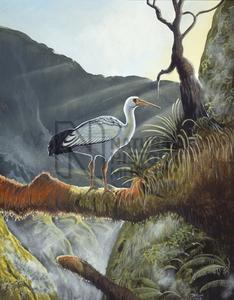
So, on Wednesday the land of sardines will face the land of…Threskiornis solitarius (the Réunion sacred ibis)! I am well bored of Europe…but Réunion is département d’outre mer of France in the Indian Ocean. So while its residents tender Euros, the fauna of Réunion is somewhat different to that of Portugal and Sweden (unlike France's hybrid of the two). The first Europeans to land on Réunion were, rather serendipitously, Portuguese sailors in the early 1500s; however, by the mid 1600s the French had taken control, and the island, east of Madagascar and about 200 km south of Mauritius, was officially a part of France, as it is to this day.

The first people to name the large, nearly flightless, bird of Réunion called it a solitaire, a name also given to a close relative of the dodo found on the island of Rodrigues (in the Mascarene islands, a part of Mauritius). This name, descriptive of its solitary habits rather than its similarity to the Rodrigues solitaire, led people to classify the Réunion sacred ibis, then only known from historical reports, as an albino dodo or Réunion solitaire. A few year ago, however, bones discovered on the island clearly showed that the bird was no more a dodo than I am really interested in the football. Instead, the bird was most similar to the sacred ibis of Madagascar, mainland Africa, and the aviary along the Regents Canal by Primrose Hill, London.

Ibises are wading birds of marsh and shoreline. And for a while the Réunion sacred ibis happily roamed the island preying on ostensibly Portuguese cockles and winkles, but the settlement of the island by the French was like a red-card from an Argentine referee for the sacred ibis. By the late 1600s the birds were very scarce, the last sighting was in 1705, by which time the species was as doomed as a failed England coach.

Join me next week for a final celebration of the world´s most ............ sporting event.

Monday, June 26, 2006

Animal of the Week June 26, 2006 -- World Cup Nations 3 (Portugal)

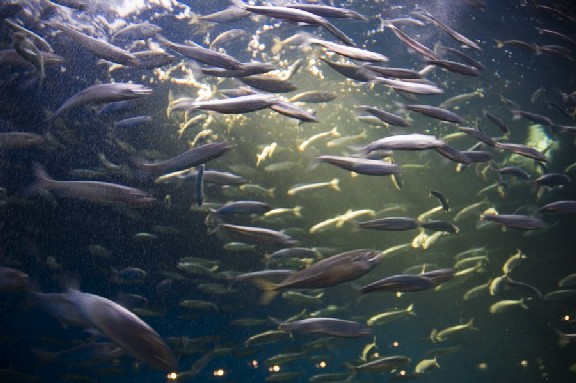
So, Portugal eh, apparently football is the national sport of Portugal, just as, after kabaddi, it is in England. But what about an animal to symbolise Portugal, welcome this week’s animal of the week Sardina pilchardus (sardine, sardinha [Portuguese]). Given England's love for these little beasts served from an iconic rectangular tin, you might be excused for thinking that they could be this nation's animal too, but herein lies the fundamental difference between these two outposts of western Europe, the Portuguese love them fresh.

In Portugal, 90% of the sardines are consumed not from a can, but straight from the sea. The way to eat your sardines is apparently simply grilled, preferably over charcoal served with boiled potatoes and a salad of grilled green peppers, basil, and olive oil, sounds delicious; I’m going to Hatt’s fishmonger first chance I get.

This celebration of the sardine in Portugal would have been more appropriate a couple of weeks ago, for June 13 was St Anthony’s feast day, when people take to the streets of Lisbon to feast on sardines cooked over open grills on the street. Sardine season lasts from April to November when the plumpest fish can be caught in abundance in the eastern Atlantic by the traditional Portuguese fisheries.

What is a sardine? Well, you may gather from the Latin name that Sardina pilchardus are actually pilchards, and the contents of your can of sardines and your can of pilchards are the same species, sardines are simply younguns. But what is a pilchard? In fact there are at least six species of fish called pilchard and at least 12 called just sardine. So it’s all rather complicated—but hey, they all look pretty much the same when barbecued or squished three to a can with tomato sauce.

As a nod to the wonderful country of Ecuador, here is a song about llamas http://www.albinoblacksheep.com/flash/llama.php. Sorry if you have seen it before. I've watched it too many times and am numb to it now but if you've not seen it, well, you might be amused...or scared.

RIP Bruno

Monday, June 19, 2006

Animal of the Week June 19, 2006 -- World Cup Nations 2 (Sweden)

Hello all,

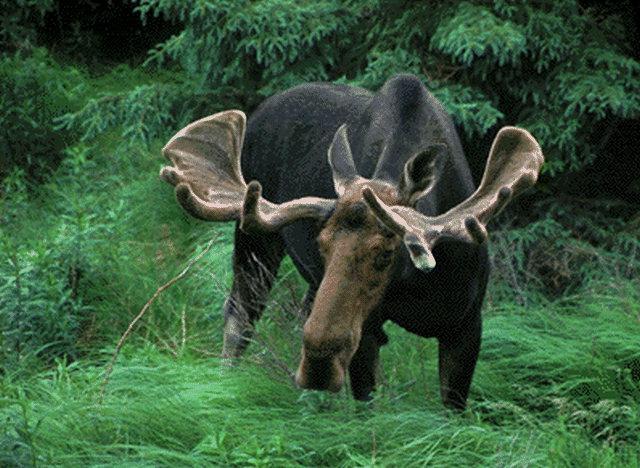
This week's animal is the unofficial animal of Sweden, Alces alces (elk, Älg [Swedish]). In North America these animals are known as moose (from the native American Algonquian word 'moos' meaning 'leaf eater'), but, as we are on Sweden this week for our World Cup nations themed animal of the week, it's elk all the way. With a population of 250 000 elk, Sweden has the highest density of and the best chance of spotting this magnificent creature anywhere in all the world.

Elk are the largest member of the deer family alive today and, in many places where they occur (as in Sweden), the largest terrestrial animal. They are also quite dangerous, males during the rut and females when with a calf have been know to attack people. By far the greatest danger to human beings posed by elk is that of road accidents. With a high centre of gravity, upon impact with a car the spindly legs snap and 500 kg of venison and antler shoot through the windshield with disastrous consequences for elk and motorists. The Älgtest (Elk-test) was developed to test rapid cornering of cars to simulate navigation around an elk in the road at high speeds. Saab's elk test includes simulated collision with elk to test their reinforced windshield.

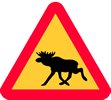
Across their range, road signs warn of this risk; attached is the Swedish interpretation. Like a nation of drunken students, German tourists find these warning signs hilarious and make trips to Sweden to gather them. The Swedes have made it a criminal offense to take the roadsigns and instead have produced a range of tourist tat bearing the roadsign image. Postage stamps in the form of the warning sign were even developed to appeal to the German tourists sending postcards home. The elk warning sign is Sweden's equivalent of our royal family.

Stepping away from Sweden, in Fairbanks Alaska, it is illegal to give a moose alcohol. One wonders why they had to instigate this law at all but also why here and nowhere else?

If you should meet an elk, here are some simple survival tips.

1. If you meet an elk on a path, turn around and walk away, this is what elk do when recognising another elk's superiority.
2. Never get between a cow and her calf.
3. Try to get behind a tree if an elk charges. You can run around the tree better than it can.
4. Remember, if you see its ears laid back and/or the hair on its "hump" stand up, it's angry or afraid and may charge.
5. Elk can kick with their front legs as well as their back.
6. If there is an elk in the road in front of you, be patient, wait for it to move.

It occured to me that I should be preempting England matches rather than covering the nations retrospectively. So, unfortunately, Trinidad and Tobago gets skipped. But look out for a T&T special when the world cup is over.

Remember to play safe and enjoy/endure the World Cup responsibly and with respect for your fellow human beings.

Monday, June 12, 2006

Animal of the Week June 12, 2006 -- World Cup Nations I (Paraguay)

Good Monday one and all,

Those of you who know me will know how excited I am about the World Cup! Not one bit, which explains why I am trailing a week behind with my nations-themed animals. This week's animal Chlamyphorus retusus (pichiciego, fairy armadillo) is an inhabitant of the Gran Chaco, an area of dry scrubland with rich plant and animal diversity in the homeland of this weekend's losers against England, Paraguay.

There are two species of fairy armadillo in South America, surprisingly the pichiego is the less gay of the two, the other being the smaller "pink fairy armadillo" (Chlamyphorus truncatus). The fairy armadillos are less heavily armoured than some of their cousins, being noted for their downy white hair on their sides and bellies. Both species are able diggers. Thankfully, after last week's epic, not a great deal is known about these animals except that they sometimes make a noise like the crying of a human baby. They survive largely on a diet of ants and grubs, although one individual kept in captivity survived solely on a diet of grapefruit and rice. How long it survived on this diet is not reported.

And wow, look at the size of these guys' hands, maybe if Paraguay had had one of these as goal defender on Saturday afternoon the British wouldn't have been able to score a bullseye in the first chukka. Come on the lads!